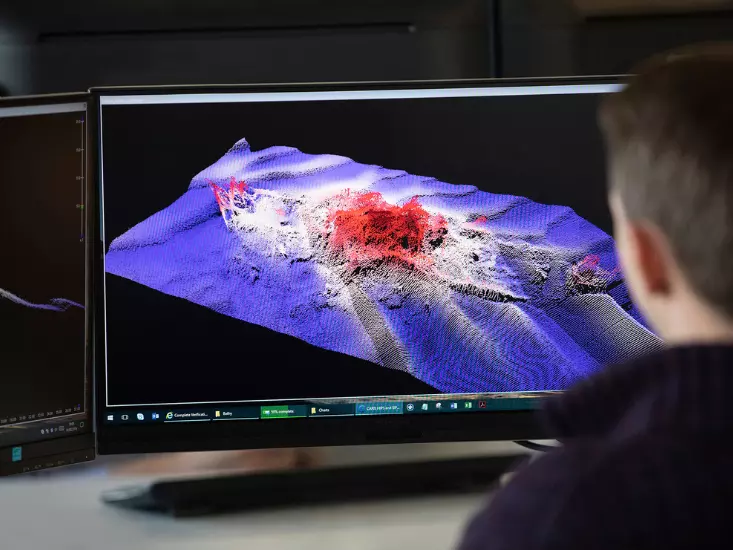
Teledyne CARIS releases HIPS and SIPS 13, delivering a new responsive interface, background processing, regional language support, and enhanced EVRT workflows for efficient hydrographic production.
Monday - 27 April 2026
Fredericton, New Brunswick, CANADA - April 28, 2026 - Teledyne CARIS today announced the release of HIPS and SIPS 13, the latest version of its industry‑leading hydrographic data processing software. This release delivers significant platform and workflow enhancements, highlighted by the introduction of background processing and a transition to a new user interface technology that improves application responsiveness and enables regional language support for global survey teams.
HIPS and SIPS 13 is focused on helping hydrographic and survey organizations move more efficiently and confidently from complex source data to validated deliverables. Improvements in efficiency and accessibility reduce friction in day‑to‑day operations, while architectural modernization provides a more flexible foundation for continued platform evolution.
A central advancement in Version 13 is the modernization of the HIPS and SIPS application, built on a new underlying user interface technology. This transition results in a more responsive application experience and a more extensible platform for future usability and workflow enhancements. As part of this modernization, HIPS and SIPS 13 introduces regional language support, with Simplified Chinese and French available in this release and additional languages planned for future versions, supporting broader adoption across multinational and distributed survey operations.
Alongside these platform improvements, HIPS and SIPS 13 continues to support advanced vertical infrastructure analysis through the EVRT engine. EVRT addresses long‑standing challenges associated with analyzing structures such as quay walls, breakwaters, bridge piles, and sheet piling, features commonly encountered in ports, harbours, and coastal infrastructure surveys.
EVRT enables vertical survey data to be transformed into a horizontal, alignment‑based coordinate system, allowing surveyors to apply familiar seabed‑oriented processing and analysis tools in new contexts. This approach supports gridding, surface difference analysis, profile generation, volume calculations, and consistent reporting workflows using proven methodologies.
“Ports and coastal infrastructure projects increasingly require accurate, repeatable analysis of complex vertical features,” said Andy Hoggarth, General Manager, Teledyne CARIS. “By combining a more efficient workflow with established tools like EVRT, HIPS and SIPS 13 helps survey teams maintain confidence and consistency while expanding the range of projects they can support.”
HIPS and SIPS 13 also introduced workflow enhancements designed to improve productivity when working with large and complex datasets. Background processing allows computationally intensive tasks to continue running while users remain productive elsewhere in the software, helping maintain momentum throughout production workflows.
“These improvements are about more than individual features,” added Hoggarth. “They reflect our continued focus on building a future‑ready platform that is accessible, and capable of supporting evolving survey requirements, whether that’s high‑volume seabed mapping or detailed infrastructure analysis.”
HIPS and SIPS 13 is available now to customers with active maintenance. Learn more here.
For more information about HIPS and SIPS 13, visit www.teledynecaris.com.
About Teledyne CARIS
For 45 years, Teledyne CARIS has been the world’s leading developer of marine mapping software. The company offers highly effective solutions for the processing and analysis of seabed datasets and enterprise solutions for the creation and Web enablement of nautical charts and digital data. CARIS is headquartered in Fredericton, New Brunswick, Canada.

